
Our Technology
ECOCYCLING Process
The Technology Behind Our Advantage
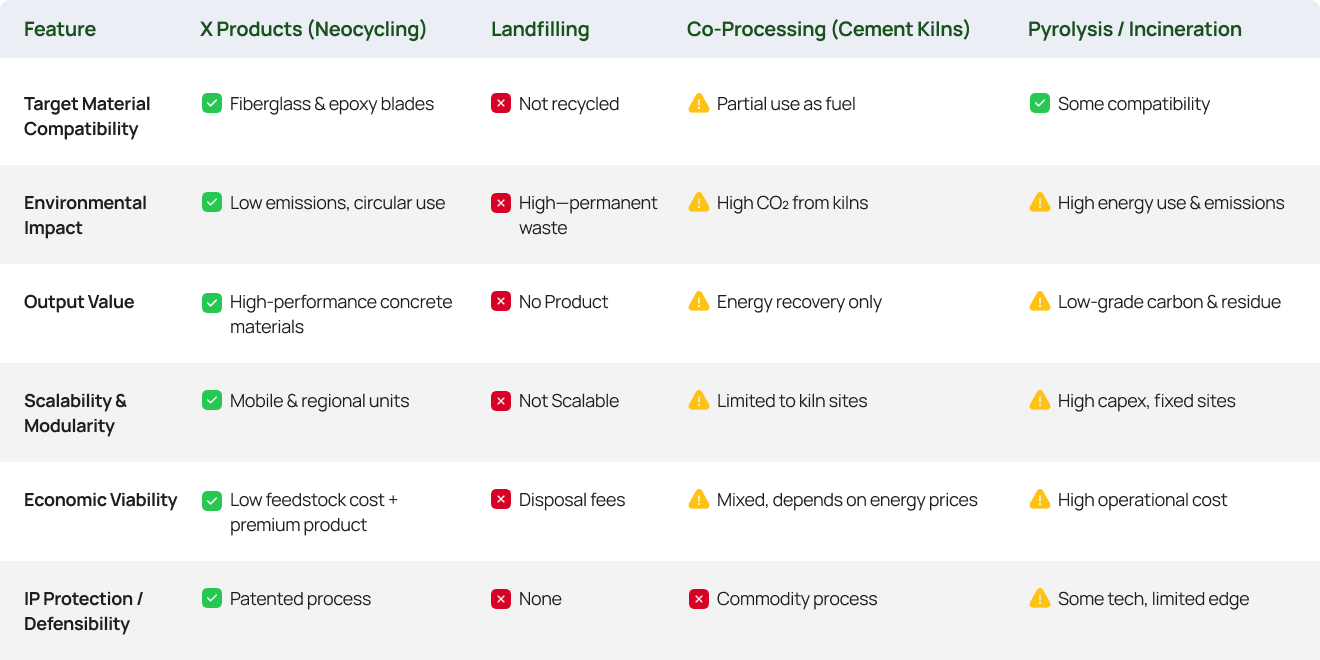
- Designed for Difficult Waste: Unlike conventional recyclers, X Products' tech is specifically materials to recycle.
- No Thermal Incineration: Avoids energy-intensive pyrolysis or incineration, reducing emissions and operating costs while preserving material integrity.
- High-Performance Output: Converts waste into structurally reliable, cementitious-grade materials—suitable for concrete, blocks, panels, and other industrial uses.
- Modular & Scalable: Built for flexible deployment—from turbine farms and landfills to regional plants—without heavy capex or custom infrastructure.
- IP-Protected Process: The core chemical and mechanical methods are patent-protected, providing defensibility and a moat against competitors.
From Concept to Execution
XProjects are Neocycling’s advanced development initiatives focused on scaling our ECOCYCLING technology across new applications and geographies. These projects encompass full-cycle innovation — from early-stage R&D to Project Management, plant design, and custom equipment production. Each XProject is a testbed for deploying our recycling solutions in new industries, validating feedstocks, and optimizing infrastructure for global rollout.
Competitive Matrix: Wind Turbine Blade Recycling

Material input
If necessary the material is pre-shredded to 300Ă—300 mm and then fed as a mass flow. Sludge is fed separately, depending on the need for treatment.

Mixing & Homogenisation
Homogenisation stage. The climate required for the desired reactions is set. The monitoring and control technology ensures optimal raw material results at all times. Optimizations of the homogenization process are obtained in the post-metering stage.

Control of all processes
Through the Ecocycling process control, every single process is continuously monitored from the task to the finished raw material. In the case of deviations, the Ecocycling process control system fully automates, for a constant raw material result.

The Ecocycling Process
The following is a simplified view of the phases in which the process runs. The process requires no external energy supply. It takes place at local, atmospheric pressure conditions. The energy required for the process comes from the reactive elements of the supplements and from the waste itself.

Grinding
We can reduce the size through our patented process from .5 mm to 2mm depending on our customer requirements and end products produced. Metals are automatically removed and later sold

Raw material storage
Depending on the quantity and capacity for transport, the new raw materials are stored.
Competitive Matrix: Wind Turbine Blade Recycling
The Ecocycling Process
The following is a simplified view of the phases in which the process runs. The process requires no external energy supply. It takes place at local, atmospheric pressure conditions. The energy required for the process comes from the reactive elements of the supplements and from the waste itself.

Material input
If necessary the material is pre-shredded to 300Ă—300 mm and then fed as a mass flow. Sludge is fed separately, depending on the need for treatment.

Grinding
We can reduce the size through our patented process from .5 mm to 2mm depending on our customer requirements and end products produced. Metals are automatically removed and later sold

Mixing & Homogenisation
Homogenisation stage. The climate required for the desired reactions is set. The monitoring and control technology ensures optimal raw material results at all times. Optimizations of the homogenization process are obtained in the post-metering stage.

Raw material storage
Depending on the quantity and capacity for transport, the new raw materials are stored.

Control of all processes
Through the Ecocycling process control, every single process is continuously monitored from the task to the finished raw material. In the case of deviations, the Ecocycling process control system fully automates, for a constant raw material result.
Competitive Matrix: Wind Turbine Blade Recycling
Process Flow Architecture
NEOCYCLING employs a comprehensive end-to-end materials recovery system for decommissioned wind turbine blades through a proprietary multi-stage process
Logistics & Pre-Processing Phase
- On-site sectioning of decommissioned blades using precision cutting equipment
- Dimensional reduction to transportable segments (typically 3-5m)
- Optimized loading configuration on specialized transport vehicles
- Chain-of-custody tracking system for material verification and quality assurance
Core Processing Technology
- Patented grinding process utilizing multi-stage size reduction
- Proprietary separation technology for fiber/resin matrix disassociation
- Controlled thermal-mechanical processing environment
- Real-time monitoring via integrated sensor arrays for process optimization
- Continuous quality control sampling at critical process nodes
Material
Transformation
- Conversion of composite materials to high-purity silica sand (SiOâ‚‚)
- Particle size distribution control: 0.075-4.75mm (customizable to application)
- Contaminant removal through multi-stage filtration
- Material characterization via XRD, SEM, and particle size analysis
- Compliance with ASTM C33 specifications for concrete aggregates
Concrete Production Integration
- Direct feed system to concrete batching plant
- Computerized mix design optimization for specific applications
- Quality assurance through continuous strength testing (ASTM C39)
- Product certification to industry standards
- Traceability system linking final products to source materials
Technical Specifications
NEOCYCLING facilities operate according to the following technical parameters:
-
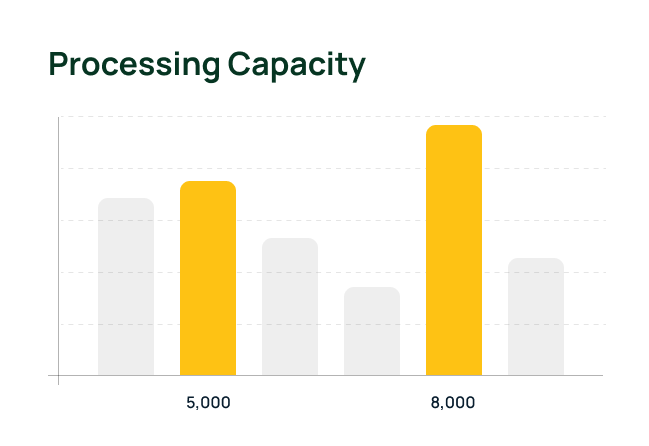
Processing Capacity:
5,000-8,000 tons of blade material annually per facility
-
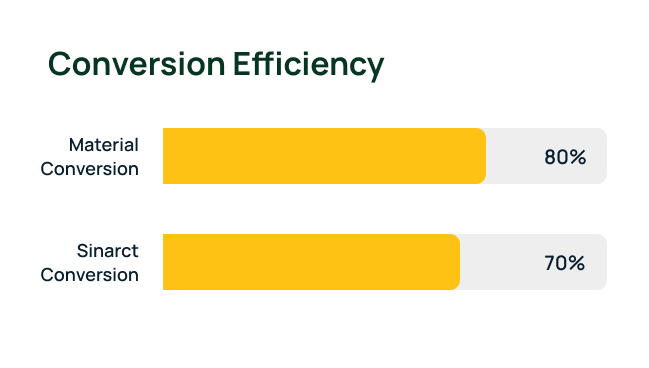
Conversion Efficiency:
>95% material recovery rate
-
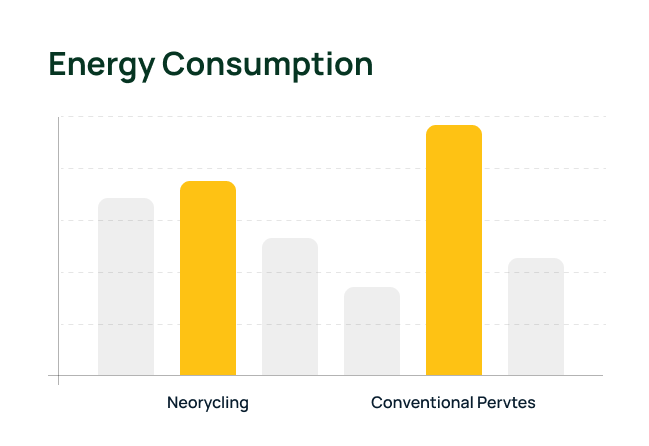
Energy Consumption:
35-45% lower than conventional recycling methods
Vertical Integration Model
Transforming Wind Turbine Waste into Valuable Resources
- Design
Engineered systems tailored to regional material flows and market demands
- Build
Turnkey facility construction with modular, scalable architecture
- Own
Direct asset ownership ensuring quality control and operational excellence
- Proprietary
Proprietary process control systems with real-time optimization
- Predictive
Predictive maintenance protocols to maximize uptime and efficiency
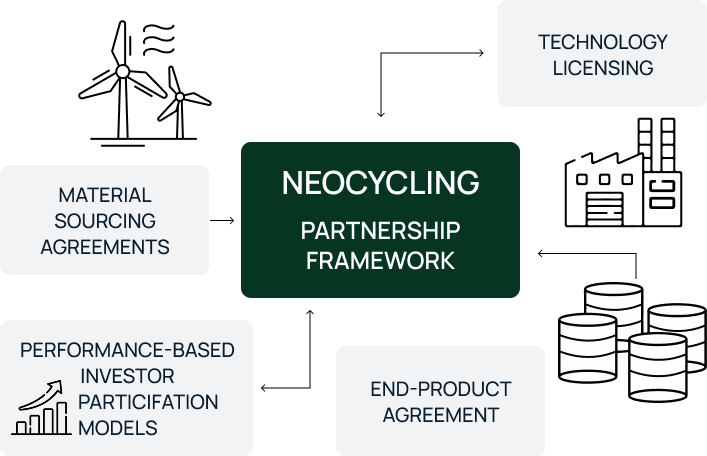
Partnership Framework
NEOCYCLING’s technical operations are structured through strategic partnerships:
- Material sourcing agreements with wind farm operators ensure consistent supply of decommissioned blades
- Technology licensing arrangements with qualified implementation partners enable rapid scaling
- Performance-based investor participation models align financial incentives with operational excellence
- End-product offtake agreements with construction industry stakeholders secure reliable market channels
- IP-Protected Process: The core chemical and mechanical methods are patent-protected, providing defensibility and a moat against competitors.
“At NEOCYCLING, we combine science, sustainability, and innovation.”
Neocycling FAQs
How does your ECOCYCLING process work?
Our proprietary method breaks down composite wind turbine blades into reusable silica-rich material without hazardous waste. The result: a clean, construction-grade silica sand ready for concrete applications.
Is this technology proven?
We recycle what others can’t. NEOCYCLING transforms decommissioned wind turbine blades into premium silica sand for concrete, using our patented ECOCYCLING process. It’s sustainable, scalable, and solving a major global waste problem.